
Structural Colour
STRUCTURAL COLOUR PRODUCED WITH NANO IMPRINTED TiO2 RGB PIXELS
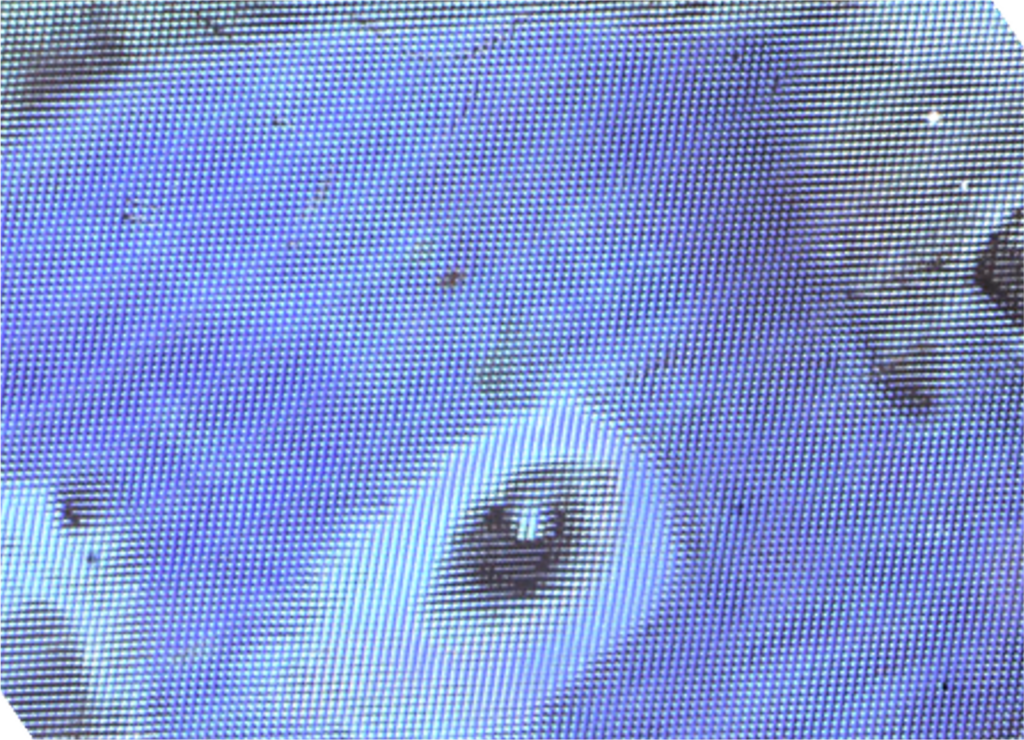
This image was obtained with a Master from ARNANO and the design of the metaoptics by S. Lanteri and M. Elsawy.
The concept of structural colour
Structural colour is colour that arises not from pigments or dyes, but from the interaction of light with micro- and nano-structures whose dimensions are comparable to the wavelength of visible light. These structures selectively reflect, transmit, or scatter certain wavelengths through interference, diffraction, and resonant effects, producing vivid colours that do not fade because no chemical absorption is involved.
Unlike chemical absorption, structural colour can be very pure (narrow spectral resonances) and intense (nearly unit reflected or transmitted intensity at resonance).
Structural colour relies on photonic micro-and nano-structures leveraging one or more of these physical effects:
Colour from constructive/destructive interferences in layered films (e.g. soap bubbles, oxide coatings).
Periodic refractive-index layers reflecting specific wavelengths.
Subwavelength nano-antennas (Mie or plasmonic resonances) tailored to specific colours.
2D or 3D periodic dielectric structures creating photonic bandgaps for light transmission.
Periodic surface patterns that spatially separate wavelengths.
Short-range order producing angle-independent colour (e.g. bird feathers).
Examples of solnil's realisations
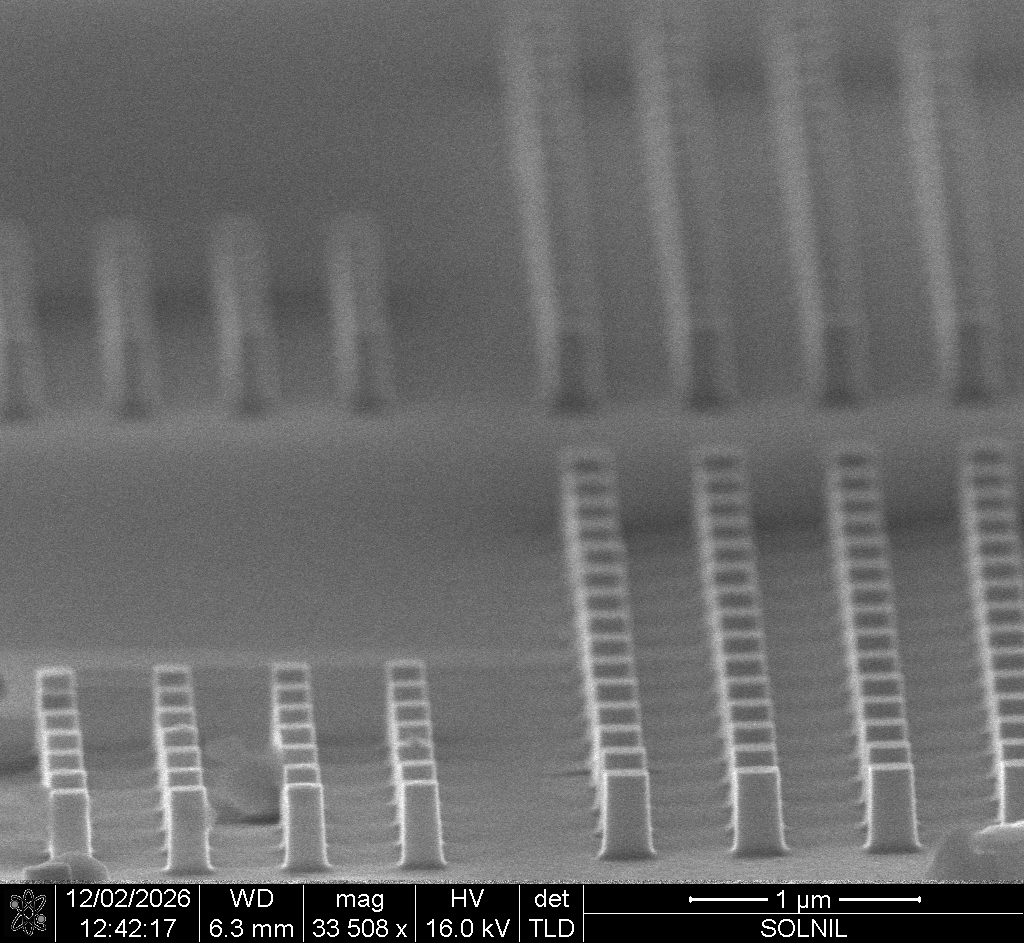
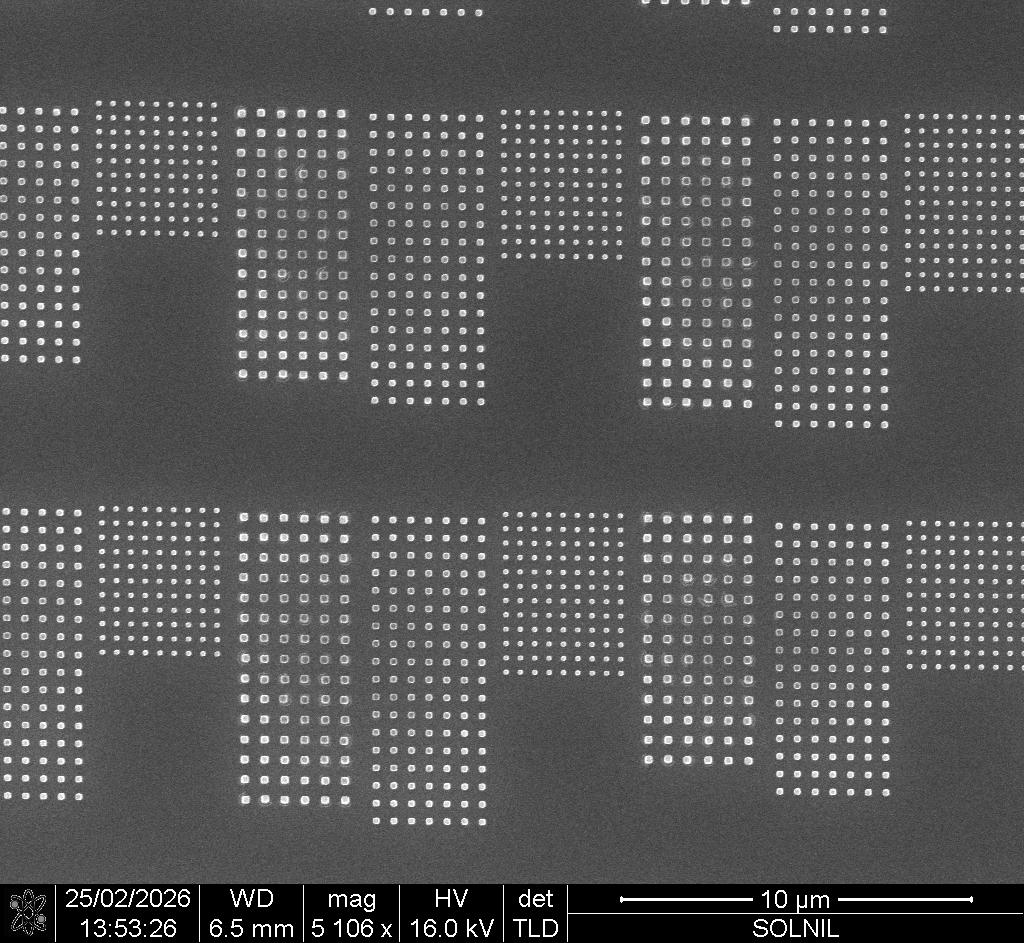
Direct imprint of HIRi-COAT resin into RGB pixels composed of 500nm tall pillars arranged in square arrays of different sizes and pitches to produce the RGB scattering.
Where it makes an impact
Why is it different?
Structural colour offers several key advantages over conventional pigments and dyes making it particularly attractive for long-lived applications such as façades, security features, optical components, and next-generation displays.
Non-fading and durable
Since colour is produced by physical structure rather than chemical absorption, structural colours do not bleach or degrade under UV exposure, heat, or harsh environments.
High colour purity and brightness
Precise control of nanoscale geometry enables sharp spectral features and vivid colours with minimal optical loss.
Environmental Stability & Sustainability
Made from inorganic materials (e.g. SiO₂, TiO₂), structural colours are chemically stable, environmentally resistant, and free from toxic pigments.
Design Flexibility
Colour is tuned by geometry (period, height, shape) rather than chemistry, enabling continuous tuning and multifunctional surfaces.
Ultra-high resolution
Nanoscale patterning allows colour features far below the limits of ink-based printing.
Added functionality
The same nanostructure can combine colour with optical functions such as anti-reflection, sensing, polarization control, or angle selectivity.
Are you developing the optics of the future?
This is what solnil does.
To discuss your technical needs or to initiate a collaboration, contact our team.